Freediving and the menstrual cycle
Did you know your menstrual cycle might be affecting your freediving?
I didn't either. Not really, not until I had a dive that made no sense.
I had my first LMC out of nowhere, on a dive that I definitely shouldn’t have. There were warning signs, faster heart rate, earlier and STRONG contractions on my warm up hang, a negative mindset that day and my breathe-up took forever, but I wasn’t paying close enough attention. And so, my body called enough.
I wasn’t sure exactly why it happened, at first. I went through all the usual checks in my head: sleep, food, stress, hydration? But I couldn’t quite pin down why a dive that was doable another day, wasn’t on this one.
I realised later where I was in my menstrual cycle, and things started to make sense.
That dive was part of what led to research this topic some more.
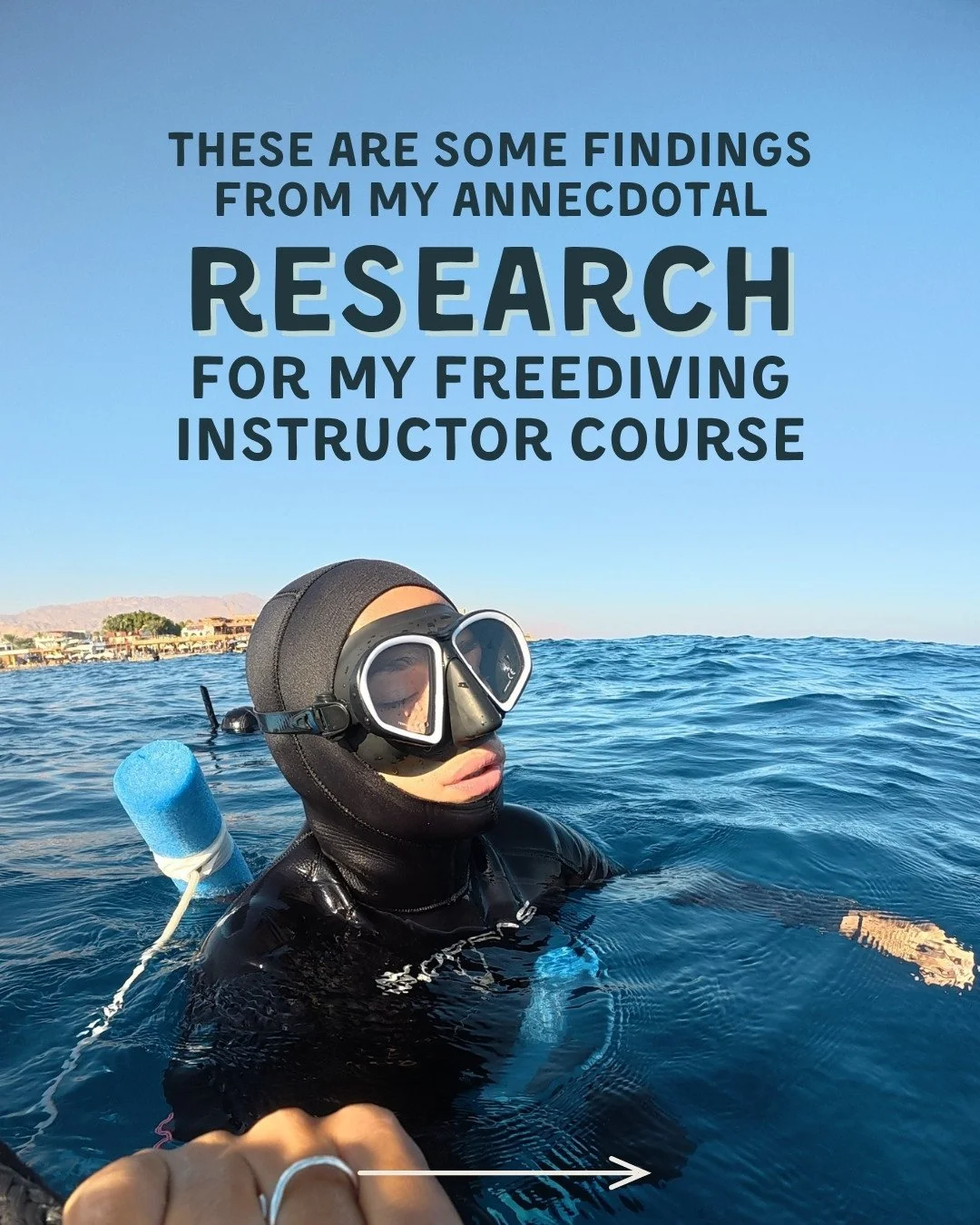
For my AIDA Instructor course, we were tasked to research and present on a topic of our choice, something that extends beyond the standard course material. This seemed perfect because the conversation around menstrual cycles and freediving is almost nonexistent, and I wanted to understand why, and what we're missing by not having it.
Over several weeks I searched online for research on freediving, breath hold and menstrual cycles, plus sports science topics adjacent to it…. not surpisingly, but sadly, very little sound research exists.
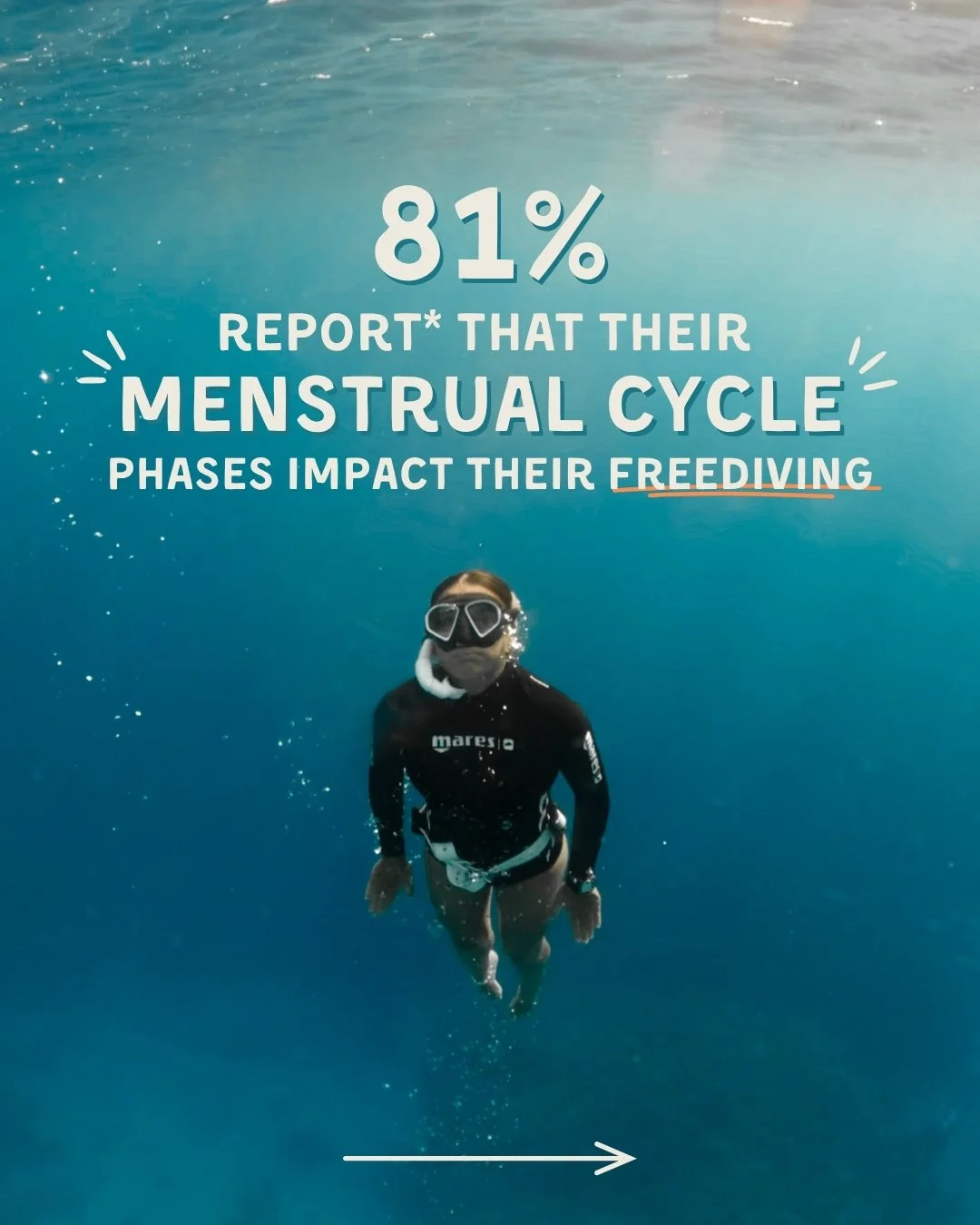
So, I set out to ask my community. I surveyed a sample of 27 self selected women with cycles who freedive, and asked them questions about if and how they noticed their cycle phases affected their freediving performance. Most of them did, and some patterns emerged…
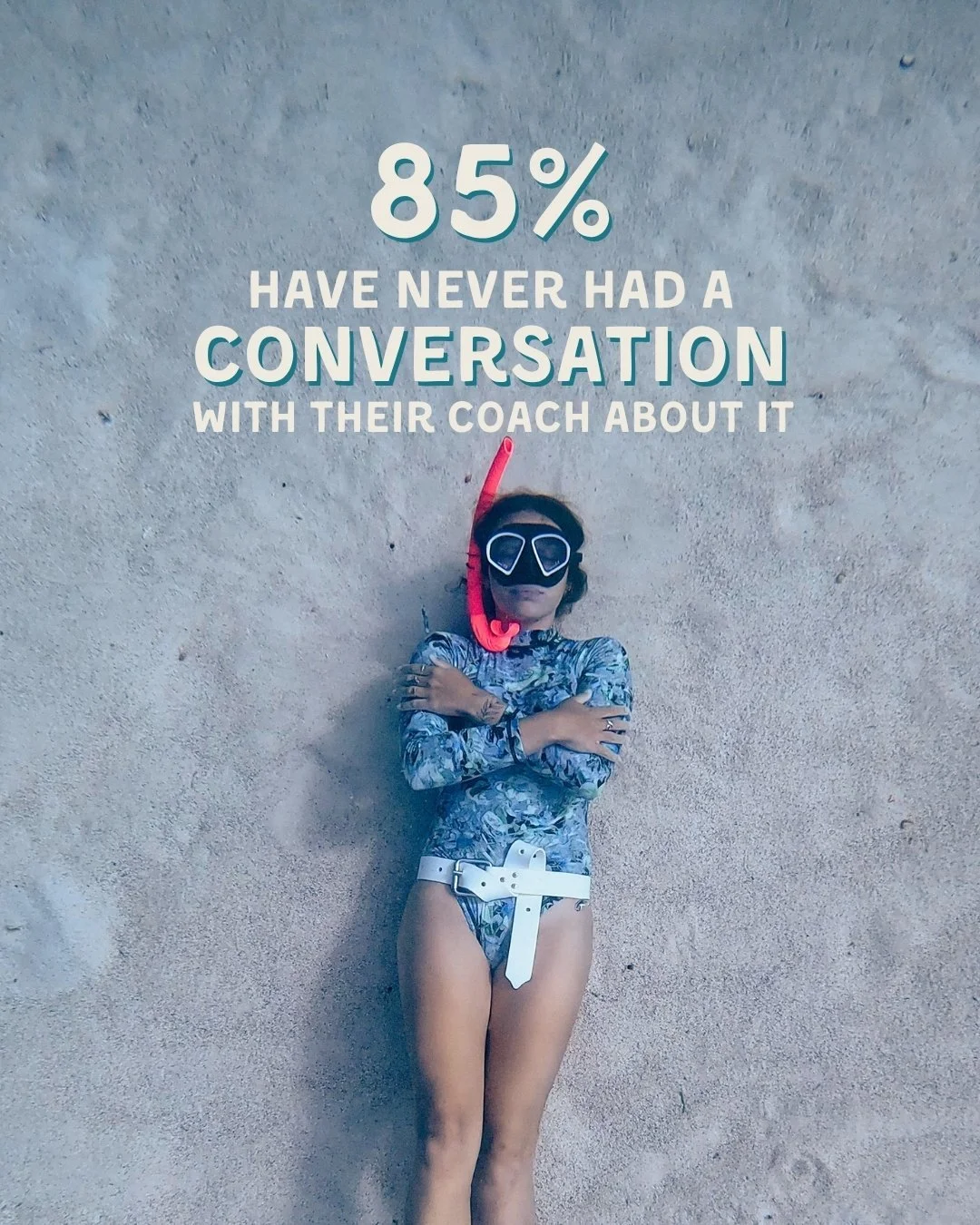
In additional research, I did uncover some big truths, like this:
Across sport in general, 81% of women have never spoken to a coach about how their cycle might affect training or performance.
In freediving, where so much depends on your nervous system, your relaxation, your breath hold experience, your equalisation, this feels like a significant gap.
We already know women's physiology changes across a cycle. It affects ligament laxity, cardiovascular response, CO2 sensitivity, sleep quality, anxiety levels, and recovery. These aren't minor variables. In a breath-hold sport, they're worth knowing about.
But here's what I want to be clear about from the start: this is not a rulebook.
The research in this area is still limited. Every person's cycle is different. Every diver's experience is different. I'm not here to tell anyone when they should or shouldn't get in the water. Cycle-syncing your freediving training is completely optional, and a one-size-fits-all approach isn't what I'm recommending.
What I am recommending is awareness. And curiosity. And the idea that tracking your own patterns, over time, in your own body, might just give you one more tool in your kit.
Over the coming weeks I'll be sharing a series of resources exploring this topic more deeply. Physiology, the phases, what the limited evidence suggests, and, importantly, how to start paying attention in a way that's personal to you.
This first post is just the door opening. If you've ever had a dive that felt completely off for no obvious reason, this series might be worth following.
Bookmark this, share it with a female diver you know, or send it to a coach or buddy who'd benefit from understanding it too. The more we talk about this, the less invisible it becomes.
This series is based on research conducted for my AIDA Instructor course special presentation. I'm not a scientist or academic. I'm a freediving instructor who got curious after a dive that rattled me, and started digging. All information is shared in good faith, backed by available science and real experience, with the aim of sparking better conversations.